
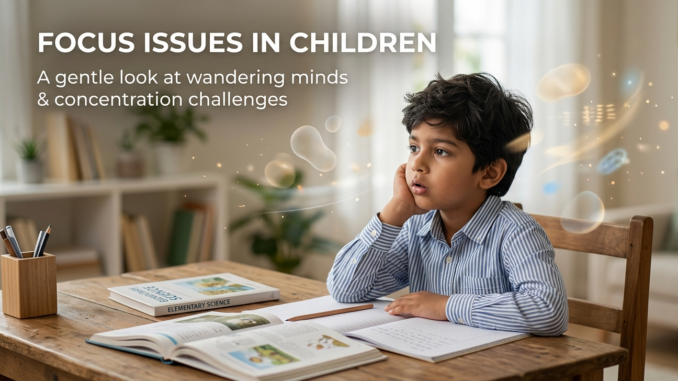
Many parents often say, “My child is very smart, but just doesn’t sit and study.” This concern has become increasingly common, leading to an important question: “Why do some children struggle with focus and attention even when they are intelligent?” The answer often lies not in a lack of ability, but in how a child processes information, manages energy, and regulates attention.
Focus and attention are essential skills that influence every aspect of a child’s development, from learning in the classroom to completing daily tasks and interacting with others. While every child may become distracted occasionally, persistent difficulty concentrating can affect academic performance, confidence, emotional well-being, and overall development. Understanding the underlying causes is the first step toward providing the right support and helping children reach their full potential.
Why Focus and Attention Are Important for Child Development
Focus and attention allow children to absorb information, follow instructions, solve problems, and complete tasks independently. These skills are closely connected to memory, learning, emotional regulation, and executive functioning, all of which play a vital role in school readiness and everyday life.
Children with strong attention skills are better able to:
- Follow classroom instructions effectively
- Complete homework and daily tasks independently
- Stay engaged during learning activities
- Improve problem-solving and critical thinking skills
- Develop better listening and communication abilities
- Manage emotions and frustration more effectively
- Participate confidently in group activities and social interactions
- Build self-confidence through successful learning experiences
When children experience ongoing difficulties with focus and attention, they may find even simple activities challenging despite having good intelligence and learning potential.
Why Focus and Attention Issues Are Increasing in Children
In today’s fast-paced, screen-heavy environment, children are constantly exposed to high levels of stimulation. This can make it difficult for them to slow down, focus, and engage in structured tasks like studying or completing assignments.
Modern lifestyles often include increased screen time, frequent digital distractions, reduced physical activity, irregular sleep routines, and limited opportunities for sensory-rich play. These factors can make it more challenging for children to develop sustained attention and self-regulation skills naturally.
Children with attention difficulties may:
- Get easily distracted
- Avoid tasks that require effort
- Leave work incomplete
- Struggle to sit in one place
- Act impulsively or restlessly
- Frequently lose track of instructions or forget what they were asked to do
- Switch between activities without completing them
- Have difficulty organizing school materials or managing daily routines
- Appear daydreamy or mentally “checked out” during conversations or classroom activities
This is often misunderstood as laziness or lack of discipline. However, in many cases, it is linked to challenges in attention regulation, sensory processing, or executive functioning skills.
Common Reasons Why Children Struggle with Focus and Attention
Every child is different, and attention difficulties can develop for various reasons. Some of the most common causes include:
1. Sensory Processing Challenges
Some children become overwhelmed by sounds, lights, movement, or other sensory inputs, making it difficult for them to concentrate on learning tasks.
2. Executive Functioning Difficulties
Executive functioning skills help children plan, organize, remember instructions, and manage time. Weaknesses in these areas can significantly affect attention and task completion.
3. Limited Self-Regulation Skills
Children who struggle to regulate their emotions or energy levels may find it difficult to remain calm and focused during structured activities.
4. Developmental Conditions
Attention difficulties may sometimes be associated with conditions such as Attention Deficit Hyperactivity Disorder (ADHD), Autism Spectrum Disorder (ASD), learning disabilities, or developmental delays. However, difficulty focusing alone does not necessarily indicate any specific diagnosis. A comprehensive assessment is always recommended before drawing conclusions.
5. Lifestyle Factors
Poor sleep, inadequate physical activity, excessive screen exposure, stress, anxiety, or inconsistent daily routines can also reduce a child’s ability to maintain attention.
How Occupational Therapy Improves Focus and Learning
Occupational Therapy is one of the most effective ways to help children improve focus, attention, and self-regulation. Instead of forcing a child to “sit and study,” therapy works on building the underlying skills required for learning.
Occupational Therapy addresses the root causes of attention difficulties by improving sensory processing, body awareness, emotional regulation, motor planning, and executive functioning. As these foundational skills develop, children naturally become better at concentrating, following instructions, and completing tasks independently.
At our Thane centre, located within the peaceful Singhania School campus, therapy sessions are designed to:
- Improve attention span gradually
- Enhance task completion skills
- Build body awareness and control
- Support sensory regulation
- Develop better study habits
- Strengthen executive functioning and organizational skills
- Improve impulse control and emotional regulation
- Increase classroom participation and learning readiness
- Develop problem-solving and independent learning abilities
We use structured activities that are engaging yet goal-oriented, helping children learn without feeling pressured.
Therapy sessions may include sensory integration activities, movement-based exercises, attention-building games, visual perception tasks, fine motor activities, obstacle courses, and interactive problem-solving exercises. Each program is personalized according to the child’s individual developmental needs and learning goals.
Consistency is key. Small improvements over time lead to significant changes in behavior, academic performance, and confidence.
Parents often notice that once their child’s attention improves, everything else becomes easier, from following instructions to completing schoolwork independently.
Children often become more confident, better organized, and more willing to participate in classroom discussions, extracurricular activities, and everyday routines as their attention skills continue to improve.
Simple Ways Parents Can Improve Focus at Home
Parents play an important role in helping children strengthen attention skills outside therapy sessions. Some simple strategies include:
- Create a consistent daily routine
- Reduce unnecessary screen time before study sessions
- Break larger tasks into smaller, manageable steps
- Provide short movement breaks between activities
- Use positive reinforcement to encourage effort rather than perfection
- Maintain a quiet, distraction-free study environment
- Encourage outdoor play and regular physical activity
- Ensure your child gets adequate sleep and balanced nutrition
Small daily habits can make a significant difference in improving a child’s ability to concentrate and complete tasks successfully.
When Should Parents Seek Professional Help?
It may be beneficial to consult an Occupational Therapist if your child:
- Frequently loses focus during age-appropriate activities
- Has difficulty completing homework or classroom tasks
- Cannot remain seated for short periods when required
- Acts impulsively or becomes easily frustrated
- Struggles to follow multi-step instructions
- Shows signs of sensory sensitivities that interfere with learning
- Experiences declining academic performance despite good intelligence
- Faces challenges in social interactions due to poor attention or self-regulation
Early assessment and intervention can help identify the underlying causes of attention difficulties and provide targeted strategies before these challenges begin affecting academic success, emotional well-being, and overall development.
Supporting Your Child’s Learning Journey
At Shaping Therapies Thane, we work with many children who have the potential to perform well but need the right support to channel their abilities effectively.
Our experienced Occupational Therapists provide individualized assessments and evidence-based intervention programs that help children improve focus, attention, sensory regulation, executive functioning, and learning readiness. Every therapy plan is designed to build confidence while supporting long-term academic and developmental success.
If your child struggles to focus, it is important not to wait or assume they will outgrow it. With the right guidance and early intervention, children can develop strong attention skills that support them throughout their academic journey and beyond.
With patience, consistent support, and family involvement, children can make remarkable progress in developing attention, self-confidence, independence, and lifelong learning skills. Helping your child build strong focus today creates the foundation for greater success in school, relationships, and everyday life.
Leave a Reply