
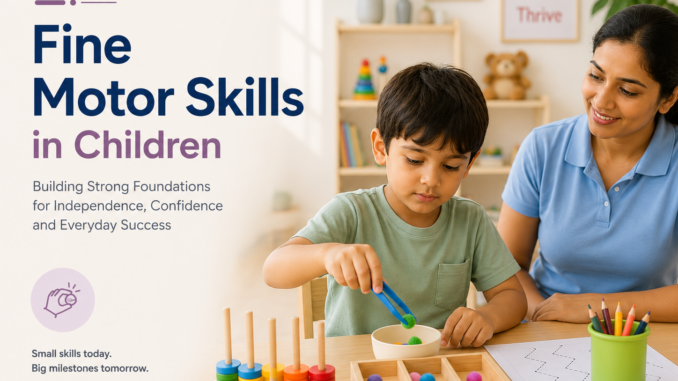
As parents, we often celebrate our child’s first steps or first words, but many of the smaller milestones are just as important. Fine Motor Skills in Children play a vital role in everyday activities such as holding a pencil, buttoning a shirt, eating with a spoon, drawing, cutting with scissors, and even turning the pages of a book. These small hand and finger movements may seem simple, but they require coordination, strength, and control that develop over time.
When children struggle with fine motor skills, everyday tasks can become frustrating. They may avoid drawing, dislike writing activities, or need extra help with dressing and feeding themselves. Understanding these challenges early allows parents to provide the right support and helps children build confidence in their abilities.
What Are Fine Motor Skills?
Fine motor skills refer to the coordinated movements of the small muscles in the hands, fingers, and wrists. These muscles work together with the eyes and brain to perform precise tasks.
Children use fine motor skills every day when they:
- Hold crayons, pencils, or markers
- Colour and draw
- Write letters and numbers
- Cut paper with scissors
- Build with blocks or construction toys
- Open lunch boxes
- Zip jackets and button clothes
- Brush their teeth
- Feed themselves using spoons or forks
As children grow, these skills become increasingly important for school readiness, independence, and confidence.
Signs Your Child May Be Struggling
Every child develops at their own pace, but there are certain signs that may indicate your child needs additional support.
Some common signs include:
- Holding a pencil awkwardly
- Avoiding colouring or writing
- Difficulty using scissors
- Trouble buttoning clothes or zipping jackets
- Weak hand strength
- Frequently dropping objects
- Becoming frustrated during craft activities
- Taking much longer than peers to complete fine motor tasks
These difficulties don’t necessarily mean something is seriously wrong. In many cases, children simply need guidance and opportunities to strengthen these skills.
Why Are Fine Motor Skills So Important?
Strong fine motor skills affect much more than handwriting.
Children with good hand control often find it easier to:
- Participate confidently in classroom activities
- Complete homework independently
- Develop neat handwriting
- Manage self-care routines
- Build confidence during play
- Develop creativity through drawing and crafts
Children who struggle may begin avoiding activities they find difficult, which can sometimes affect confidence and classroom participation.
What Causes Fine Motor Difficulties?
Several factors can influence fine motor development.
These may include:
Hand Strength
Weak muscles in the hands and fingers make it difficult to hold pencils, manipulate small objects, and complete detailed tasks.
Hand-Eye Coordination
Children need their eyes and hands to work together effectively for activities such as writing, drawing, catching a ball, or threading beads.
Sensory Processing
Some children avoid certain textures or activities because they feel uncomfortable, limiting opportunities to develop hand skills.
Motor Planning
Motor planning is the brain’s ability to organise and carry out movements. Children with motor planning difficulties may know what they want to do but struggle to perform the movement smoothly.
Activities That Improve Fine Motor Skills
Parents can help strengthen fine motor development through everyday play.
Some enjoyable activities include:
- Playing with play dough
- Stringing beads
- Building with LEGO or blocks
- Drawing and colouring
- Cutting shapes with child-safe scissors
- Using tweezers to pick up small objects
- Solving puzzles
- Folding paper
- Painting with brushes
- Picking up coins or buttons
These activities build finger strength while keeping learning enjoyable.
How Occupational Therapy Helps
At Shaping Therapies, Powai, Occupational Therapy focuses on developing the foundation children need for everyday success.
Rather than simply practising handwriting, therapists identify the underlying reason why a child may be struggling.
Therapy may focus on improving:
- Hand strength
- Finger coordination
- Pencil grasp
- Bilateral coordination
- Core stability
- Hand-eye coordination
- Sensory processing
- Attention during table-top activities
Sessions are personalised to each child’s age, abilities, and goals, making learning both effective and enjoyable.
Supporting Your Child at Home
Parents can encourage fine motor development through simple daily routines.
Try to:
- Let children dress themselves
- Encourage colouring without worrying about perfection
- Choose toys that involve building and creating
- Reduce passive screen time
- Praise effort rather than neatness
- Allow extra time for independent practice
Remember that progress takes time. Every small improvement helps build confidence.
When Should You Seek Professional Support?
It may be helpful to consult an Occupational Therapist if your child:
- Avoids writing or colouring completely
- Falls behind classmates in handwriting
- Struggles with dressing independently
- Complains of tired hands while writing
- Has difficulty using both hands together
- Frequently becomes frustrated during fine motor tasks
Early intervention allows children to develop these essential skills before they begin affecting school performance and self-confidence.
Helping Children Build Independence
Fine motor skills are part of almost everything children do throughout the day. From tying shoelaces to completing schoolwork, these abilities help children become more independent and confident.
At Shaping Therapies, Powai, our experienced Occupational Therapists work closely with children and families to strengthen fine motor skills through engaging, evidence-based therapy programs. Every child develops at their own pace, and with the right support, they can gain the confidence to participate fully at home, in school, and in everyday life.
Building strong foundations today prepares children for tomorrow’s challenges, one small movement at a time.
Leave a Reply