
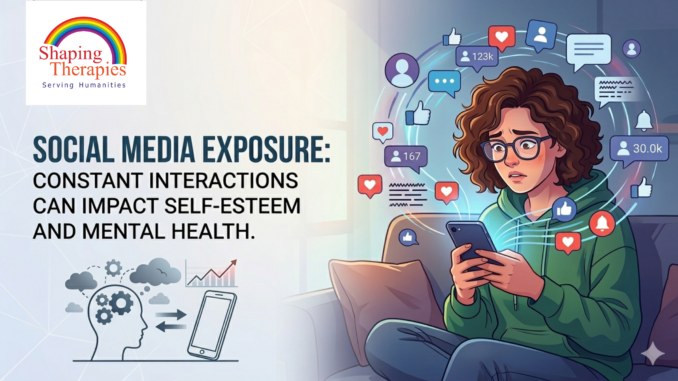
In today’s digital world, children and teenagers are growing up with constant access to social media. Platforms that allow instant communication, sharing, and connection have become part of everyday life. While social media can offer opportunities for creativity and connection, excessive exposure can also affect emotional well-being, confidence, and self-esteem.
At Shaping Therapies, Thane, we often meet families who notice changes in their child’s mood, confidence, or attention that may be linked to prolonged screen and social media use.
Understanding the relationship between social media and children’s mental health is an important step in helping children build healthier digital habits.
The Growing Influence of Social Media
Children today are exposed to a large amount of digital content every day. Social media platforms encourage constant comparison through photos, achievements, and curated lifestyles.
While adults may understand that social media does not always reflect reality, children and adolescents are still developing the emotional and cognitive skills needed to interpret these messages critically.
As a result, frequent exposure to online content can influence how children view themselves and their lives.
How Social Media Can Affect Self-Esteem
One of the most common concerns related to social media exposure is its impact on self-esteem.
Children may begin to compare themselves with peers or influencers they see online. When they feel they do not measure up, it can lead to feelings of insecurity or dissatisfaction.
Some possible effects include:
- Increased self-comparison
- Feeling pressure to look or behave a certain way
- Reduced confidence
- Fear of missing out (FOMO)
- Sensitivity to online feedback or comments
For children who already experience emotional or social challenges, these pressures may feel even more intense.
Emotional Effects of Constant Online Interaction
Beyond comparison, constant online communication can also affect emotional regulation.
Children who spend significant time interacting online may experience:
- Anxiety related to online approval or responses
- Difficulty disconnecting from devices
- Irritability when screen time is limited
- Reduced attention to offline activities
In some cases, children may also struggle with sleep if social media use continues late into the evening.
These patterns can gradually affect mood, concentration, and emotional stability.
The Importance of Balance
Social media itself is not inherently harmful. Many children use digital platforms to stay connected with friends, explore hobbies, or learn new information.
The challenge arises when online interaction begins to replace important real-world experiences such as physical activity, family conversations, and face-to-face friendships.
Healthy balance helps children enjoy the benefits of technology while protecting emotional well-being.
Parents can encourage balance by:
- Setting clear screen-time routines
- Encouraging offline hobbies and activities
- Having open conversations about online experiences
- Modelling healthy digital habits as adults
These steps help children develop a healthier relationship with technology.
Supporting Emotional Resilience in a Digital World
Children need guidance to navigate the emotional impact of social media. Developing self-confidence, emotional awareness, and communication skills can help them interpret online experiences more positively.
At Shaping Therapies, Thane, therapy supports children in strengthening emotional regulation, confidence, and social communication skills. Speech therapy and occupational therapy can help children manage emotional reactions, build self-esteem, and develop healthier responses to everyday challenges.
By focusing on emotional resilience, children become better equipped to handle the pressures that sometimes accompany digital environments.
Helping Children Build Healthy Digital Habits
Supporting children in a digital age does not mean removing technology completely. Instead, it involves helping them develop awareness and balance.
When children feel confident in themselves and supported by their environment, the influence of social media becomes easier to manage.
If you notice that social media exposure is affecting your child’s confidence, mood, or behaviour, early guidance can make a meaningful difference.
At Shaping Therapies, Thane, our team works closely with families to support emotional development and healthy coping strategies for children growing up in today’s connected world.
Leave a Reply