
When Everyday Tasks Feel Overwhelming
Every parent has seen moments when their child struggles to sit still, finish a task, or stay focused during homework or playtime. Sometimes, these challenges are more than just “kids being kids.” For some children, difficulties in attention, coordination, or sensory regulation make it hard to stay focused — leading to frustration for both the child and the parent.
That’s where occupational therapy steps in. At Shaping Therapies, Thane, our expert occupational therapists help children channel that frustration into focus through structured, play-based interventions. The goal isn’t just improvement in concentration — it’s helping children feel confident, calm, and capable in every part of their daily life.
Why Children Struggle with Focus
Children may find it hard to focus due to a mix of factors — not just distractions. Some common reasons include:
- Sensory Processing Issues: The brain may overreact or underreact to sights, sounds, textures, or movement.
- Poor Body Awareness: Difficulty understanding body position affects posture, attention, and handwriting.
- Weak Fine and Gross Motor Skills: When coordination takes effort, focus on learning decreases.
- Low Frustration Tolerance: Small setbacks feel overwhelming, leading to avoidance or meltdowns.
- Executive Functioning Delays: Trouble planning, organizing, or completing tasks.
When these challenges pile up, a child may appear inattentive or restless — but in truth, their brain is just working harder to stay balanced.
How Occupational Therapy Builds Focus
At Shaping Therapies, Thane, we don’t just teach children to “pay attention.” We help their minds and bodies work together efficiently. Here’s how OT turns frustration into focus:
1. Sensory Integration Therapy
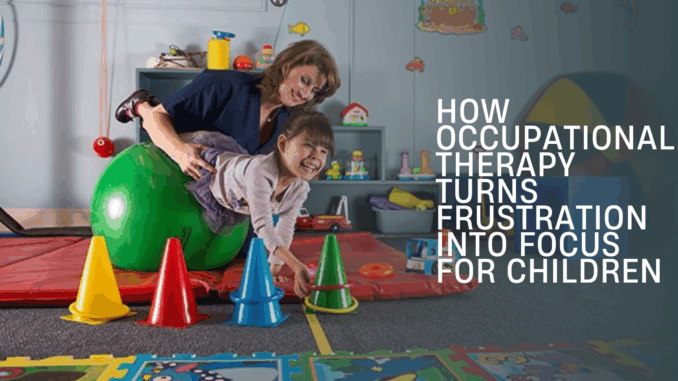
Children engage in sensory-based play — swinging, climbing, balancing, or jumping — to help regulate their sensory systems. When the body feels organized, the brain can focus better.
2. Fine Motor Skill Development
Activities like threading beads, cutting, or drawing strengthen hand muscles and improve control — key for tasks like writing or tying shoelaces.
3. Cognitive and Attention Training
Therapists use games that require turn-taking, memory, and sequencing to develop sustained attention and problem-solving.
4. Self-Regulation Strategies
Children learn techniques to identify emotions, manage frustration, and calm themselves using breathing, breaks, or movement.
5. Routine and Structure Building
Therapists work with families to create predictable routines that help children transition smoothly between activities.
From Frustration to Focus – How OT Helps
| Challenge | Impact on Daily Life | OT Strategies Used | Expected Improvement |
| Difficulty sitting still | Struggles during school or meals | Sensory activities to improve body control | Better posture and attention span |
| Easily distracted | Trouble completing tasks | Structured focus-building games | Increased concentration and task completion |
| Frequent meltdowns | Emotional overload during transitions | Self-regulation techniques and calming strategies | Improved emotional control |
| Poor handwriting | Avoids academic tasks | Fine motor strengthening and hand coordination | Neater, faster handwriting |
| Sensory overload | Restlessness in noisy or crowded environments | Sensory integration therapy | Greater comfort and calmness in daily settings |
The Role of Parents in Therapy
Parents are active partners in every child’s OT journey. At Shaping Therapies, Thane, we guide parents on:
- Recognizing triggers that cause frustration
- Creating sensory-friendly environments at home
- Using structured play to encourage focus
- Reinforcing positive behaviors and celebrating small wins
With consistent collaboration, progress becomes visible both at home and in school.
Why Early Intervention Matters
The earlier a child begins occupational therapy, the greater the impact. Early intervention helps:
- Build strong sensory and motor foundations
- Improve classroom participation and academic readiness
- Prevent emotional and behavioral frustration
- Foster long-term confidence and independence
At Shaping Therapies, Thane, we assess each child’s strengths and challenges to design a customized program that grows with them.
Helping Children Thrive with Focus and Confidence
Frustration doesn’t have to define your child’s journey. With the right guidance, support, and therapy, every child can learn to channel their energy, attention, and emotions productively.
At Shaping Therapies, Thane, our experienced occupational therapists help children transform everyday struggles into milestones of progress. Through sensory, motor, and emotional development, we help them find calm, focus, and joy in learning.
If your child finds it difficult to focus, sit still, or manage frustration, reach out to us today. Together, we can help your child rediscover confidence — one step, one sound, and one focused moment at a time.