
Introduction
Fine motor skills are the small, precise movements children use daily – holding a pencil, buttoning a shirt, zipping a jacket. These skills are vital to their academic performance, independence, and self-confidence. At Shaping Therapies, Thane, we recognize the crucial role these abilities play in your child’s development. This guide aims to educate parents and caregivers on what fine motor skills are, how they develop, when to seek help, and how occupational therapy can support a child’s growth through fun, play-based techniques.
What Are Fine Motor Skills?
Fine motor skills involve the coordination of small muscles in the hands and fingers. These movements often work in sync with visual processing, known as hand-eye coordination. Children rely on fine motor skills for everyday tasks, from feeding themselves to writing and using tools.
Examples of Fine Motor Activities:
→ Holding a pencil or crayon
→ Buttoning clothes and zipping zippers
→ Using scissors, cutlery, or Lego pieces
→ Turning book pages or opening containers
→ Threading beads or tying shoelaces
These tasks may seem simple, but they represent complex motor planning and control. Early development of these skills lays the foundation for success in school and everyday life.
The Journey of Fine Motor Development: From Reflex to Refinement
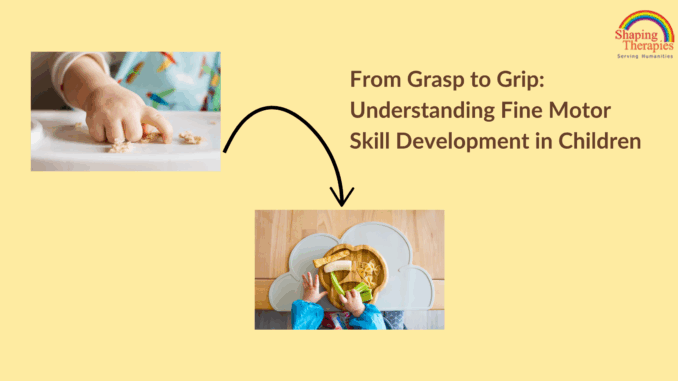
Fine motor development is a progressive journey. As children grow, their motor control evolves from basic grasping to more refined tasks like drawing and writing. Each stage builds on the last, forming the bedrock for advanced cognitive and academic tasks.
Milestone Overview:
→ Infancy (0–12 months): Begins with grasp reflex, progresses to intentional reaching, object transfer, and pincer grasp.
→ Toddlerhood (1–3 years): Scribbling, stacking blocks, page turning, and self-feeding emerge.
→ Preschool (3–5 years): Cutting with child-safe scissors, drawing shapes, and buttoning clothes are developed.
→ School Age (5+ years): Children begin writing clearly, using tools like rulers, and handling more complex materials.
Each of these phases contributes to a child’s ability to participate fully in school, play, and daily life.
Recognizing When Fine Motor Skills Need a Helping Hand
While every child develops at their own pace, some may consistently struggle with tasks that involve fine motor coordination. Noticing signs early can prevent future frustration and help children build the skills they need with the right support.
Signs Your Child May Need Support:
→ Difficulty using buttons, zippers, or fasteners
→ Poor handwriting or painful pencil grasp
→ Frequent object-dropping or trouble with cutlery
→ Avoidance of drawing, coloring, or cutting
→ Awkward grasp of pencils or crayons
→ Struggles with hand-eye coordination tasks like catching or aiming
These issues can affect academic performance and self-esteem. If such difficulties persist, a developmental evaluation by an occupational therapist can provide clarity and direction.
How Occupational Therapy Bridges the Gap
At Shaping Therapies, Thane, our expert occupational therapists assess your child holistically — physically, cognitively, and behaviorally. Through detailed observation and structured play, we identify the root causes of fine motor delays and create personalized therapy plans that are goal-oriented and enjoyable.
Our Approach Includes:
→ Strengthening exercises using therapy putty or resistance tools
→ Precision tasks like bead threading and puzzle building
→ Eye-hand coordination activities like mazes and drawing
→ Pencil grasp retraining and fine motor pattern development
→ Sensory strategies for children sensitive to textures or touch
→ Use of adaptive tools like pencil grips, slant boards, and textured surfaces
All interventions are integrated into play to keep children motivated and engaged.
Activities to Promote Fine Motor Skills at Home
Parents can greatly influence their child’s motor development through playful, age-appropriate activities at home. Building these skills early on can reduce therapy needs later and boost school readiness.
Home Activities to Try:
→ Playdough rolling, squeezing, and shaping
→ Drawing, coloring, and tracing simple shapes
→ Cutting lines and shapes with child-safe scissors
→ Tearing paper and folding origami
→ Threading buttons or beads
→ Using tongs, tweezers, or clothespins to pick up small objects
Incorporate these activities into daily routines, encouraging practice through fun and repetition.
Your Partner in Progress: Shaping Therapies, Thane
At Shaping Therapies, Thane, we are committed to supporting your child’s developmental journey with a compassionate, evidence-based approach. Our occupational therapists specialize in treating fine motor delays, designing child-specific interventions that are not only effective but enjoyable. Our environment is welcoming, play-driven, and designed to empower both children and parents.
If you’ve observed consistent challenges in your child’s fine motor abilities, it’s never too early to seek help. Early intervention can improve handwriting, independence, and confidence, allowing your child to thrive at school and at home.
Call us today for a developmental consultation and let’s build your child’s progress — one skill at a time.
Leave a Reply